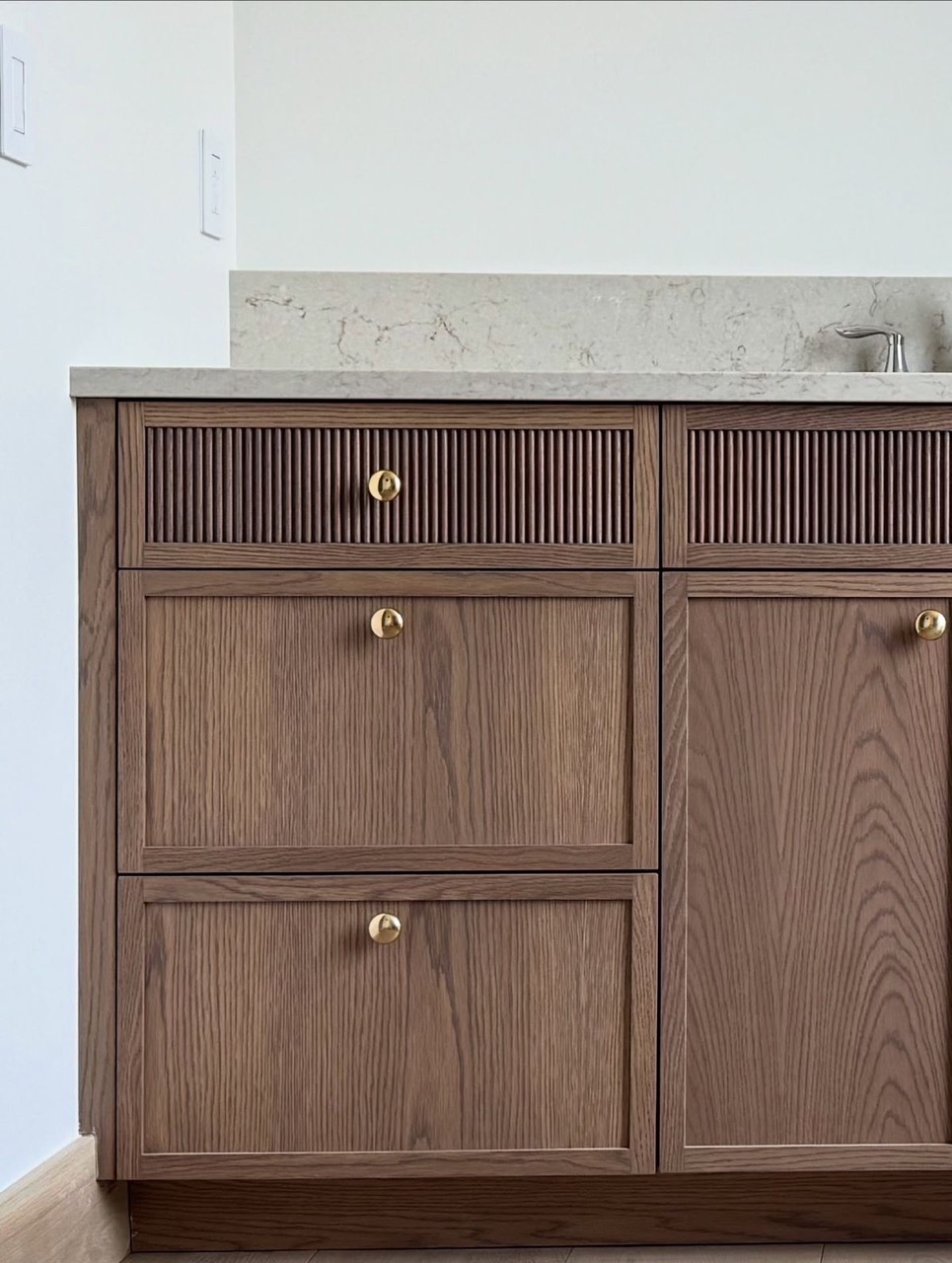
Ask most people what an interior designer does and they will describe the fun part: choosing tile, picking paint, arranging furniture, making a space feel like something.
That is the visible part. The part that actually determines whether a project stays on budget is a spreadsheet.
What a finish schedule is
A finish schedule is a document that specifies, for every surface in every room, exactly what is going on it. Not “warm white paint.” The manufacturer, the product, the colour code, the sheen, the substrate, and the application.
The same discipline extends to a fixture schedule, a door and hardware schedule, a lighting schedule, and a millwork specification. Together, they answer every question a trade could possibly ask before the trade is standing on site asking it.
It is not glamorous. It is a table. It is also the difference between a project that gets built as designed and one that gets built as improvised.
The cost of an unspecified decision
Here is what happens when a finish isn’t specified.
The tiler arrives. The drawing says “tile.” Nobody has told him which tile, what layout, where the pattern starts, or how the edges get finished. He needs to keep moving, so he makes a reasonable decision. His reasonable decision, based on his experience, in a vacuum.
Then you see it. And it is not what you pictured. Now you have three options: live with it, pay to redo it, or negotiate. All three are worse than having specified it.
Multiply that across every finish in a house and you understand why unspecified projects overrun. The cost isn’t in any single decision. It is in the accumulation of dozens of small ones, made by the wrong people, under time pressure, without reference to each other.
A decision made on paper costs design time. The same decision made on site costs a change order. That ratio is not close.
What a good schedule prevents
Change orders. The most expensive line item in most construction budgets that nobody plans for. The overwhelming majority of them trace back to a decision that could have been made earlier.
Trade downtime. A trade waiting for a decision is a trade you are paying to wait, and a schedule slipping behind every other trade queued after them.
Incoherence. This is the subtle one. When finishes are chosen individually as they come up, they are chosen without reference to each other. The result is a house where every room is defensible and the whole thing doesn’t hang together. Nobody can quite say why it feels off. It feels off because nobody ever looked at it as a whole.
Lead-time disasters. The tile you want is six weeks out. You find that out in week five if you specified early, and you find it out on installation day if you didn’t.
What to specify, and when
The rule we work to: every finish, fixture, and detail resolved before construction starts. Not most. Every.
That means, before demolition or excavation:
- Flooring by room, including transitions, underlay, and direction of lay.
- Paint by surface (walls, ceilings, trim, doors) with sheen and colour codes.
- Tile with layout drawings, not just a product name. Where the pattern centres, how edges are finished, what the grout is.
- Millwork and cabinetry drawn in elevation, with door style, finish, hardware, and interior fittings.
- Plumbing fixtures by model number, with the rough-in requirements the plumber needs before the walls close.
- Lighting by fixture, with switching and dimming, which the electrician needs before the walls close.
- Door and window hardware, consistent in finish across the house, which sounds obvious and is one of the most commonly botched details in residential construction.
The two that matter most for sequence are plumbing and lighting, because they are decided before the walls close. If those aren’t specified, you are either delaying the build or opening walls again later.
Why this matters even more on multi-unit projects
On a four-unit building, an unspecified finish isn’t one mistake. It is four, and it happens across four units that need to look consistent because they are being sold or rented against each other.
Specification discipline scales. So does the absence of it. It is one of the seven places margin quietly disappears on a small multi-unit project.
The point
Interior design is often sold as taste. Taste is part of it, but the part that pays for itself is rigour: making every decision once, early, in writing, in a coordinated set, and then not making it again.
The beautiful room is the outcome. The schedule is how you get there predictably instead of hopefully.
Where we come in
Rexford Design is an architectural drafting and interior design studio in Chilliwack, working across the Fraser Valley and the rest of BC. Drafting and design under one roof, which means every finish, material, and detail is resolved on paper before construction begins. That is not a stylistic preference; it is how projects stay on schedule and end up looking the way they were designed.
If you are planning a build or a renovation and want the details settled before anyone picks up a tool, we should talk.
Related articles
Settle the details first
Tell us about the project and where you are in it. We will come back within two business days with a scope and a proposal.
Start a Conversation →